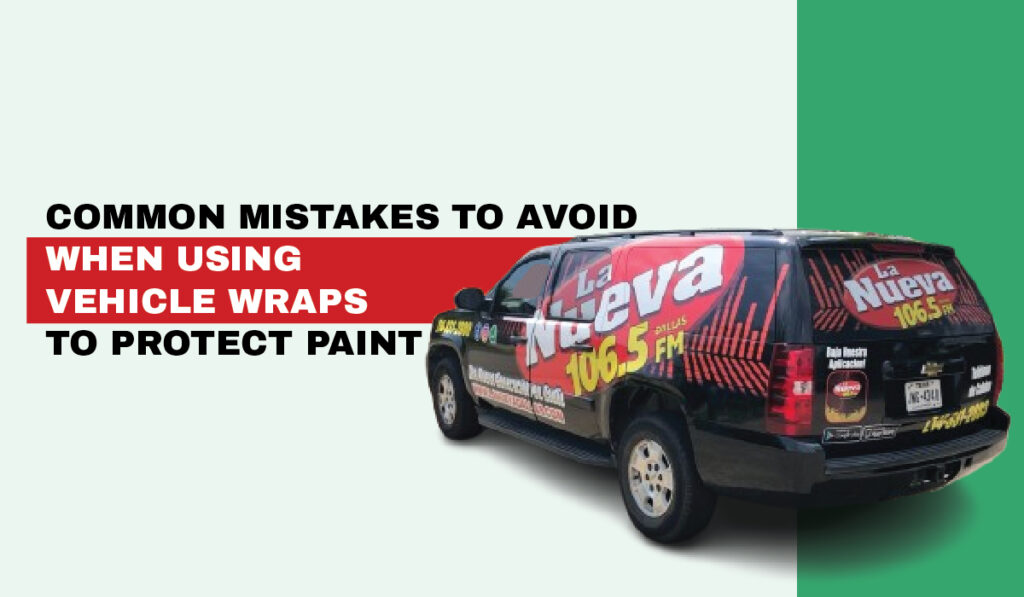
Vehicle wraps are not just a form of advertising your brand or getting your car a brand-new look—they also serve as a popular form of paint protection. There is no question a quality wrap will protect a vehicle’s surface from UV rays, light scratches, and light scuffs. When it comes to wrapping a vehicle for paint protection, they are not only meant to protect vehicles, but a lot of people make severe mistakes when wrapping, which could potentially lessen the effectiveness of the wrap and possibly damage the paint underneath. So, to aid you in getting the full value from your wrap, here are some common mistakes to avoid when wrapping a vehicle for paint protection.
Choosing Low-Quality Wrap Materials
Not all vinyl wraps are created equal. A major mistake car owners make is purchasing cheap or unknown brands to save money. Low-cost wraps will generally fade faster, will usually peel faster, will probably not adhere as well to the vehicle’s surface, and can be a pain to remove later, since you run the risk of damaging the original paint. You will always want to use trusted brand-name premium vinyl. Brands like 3M, Avery Dennison, or Oracle. You will generally get better durability, UV protection, and finish quality by choosing trusted brands. When you use a high-quality wrap, you will be better positioned to ensure your investment in our paint protection is worth every penny.
Poor Surface Preparation Before Application
A car’s surface should be completely cleaned and decontaminated before a wrap is placed on it. If there is grime, wax, or grease on the primary surface, the wrap may fail to adhere to the surface, causing bubbles, lifting edges, or peeling. Excess dust, dirt, and grease can all lead to unsightly imperfections, so you should use isopropyl alcohol to clean the surface and make sure it is 100% dry beforehand. It is best to repair any rust or chipped paint beforehand as well. Wraps will not stick as well to unsound surfaces, and the wrap will accentuate any pre-existing flaws over the years.
Applying Wraps in the Wrong Environment
The environment is very key to the wrapping process. In general, a wrap should never be applied in an open area or dusty place. Doing so runs the risk of dust and other particles going under the film and creating bubbles as well as impairing the overall quality of the finish. Extreme hot or cold weather can also affect the adhesive in the wrap—if the wrap is applied when it’s too hot, the wrap can lose some of its all-important rigidity; if used in cold weather, it may not adhere at all. Wraps should always be applied in clean, climate-controlled locations, preferably inside and well, so the application can go smoothly, result successfully, and ensure that the wrap adheres, preventing any concerns down the road, like lifting, breaking, as well as curled edges. Many jurisdictions put restrictions on wrapping — for example, there may be laws governing reflective wraps, color changes, city registration, and business signage on commercial vehicles.
Attempting a DIY Wrap Without Experience
Although wrapping seems simple enough in videos, it is a skill that involves experience, technique, and tools. A lot of vehicle owners initially opt to do it themselves to save money but often end up with creases, bubbles, and jagged edges. Not only do these errors damage the visual appeal, but they are also detrimental to the protective feature. If you want to achieve the best outcome, consider hiring an accredited professional who knows how to deal with curves, corners, and different surface types of vehicles. Regardless of whether you are wrapping a vehicle for personal use or branding, it’s wise to check local laws. A skilled professional installation will ensure the wrap looks great and lasts as long as it can.
The End
Vehicle wraps can offer a competent and fashionable means to protect your car paint as well as provide an immediate visual change. Yet, the quality of the wrap is based on the materials used, the physical application, upkeep, and maintenance. By avoiding these common mistakes, including materials to maintain, you will help prolong the life of your wrap and keep your vehicle looking good for years. No matter if you are doing a wrap for personal customization or business branding purposes, keep in mind that quality comes first, preparation, and assisting professionals to get the most out of your investment.
Leave a Reply